Cool Barbecue Foods images
A few nice barbecue foods images I found:
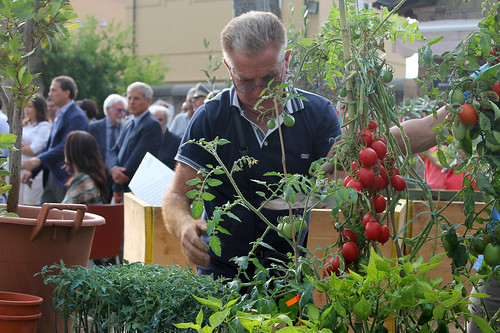
Hanukkah 2014

Image by JenCarole
Night #6 – Havuera time with long time friends.
Fire Ring

Image by Rosenwald
Prepared on the fly for the Spring Equinox.
Cool Recipes images
A few nice recipes images I found:
Hawaiian Sweet Bread recipe 4

Image by hawaiianfoodrecipe
Famous Hawaiian Sweet Bread Recipe
IMG_5768

Image by Micah Sittig
DCEP (3)

Image by RobynAnderson
Cool Family Meals images
A few nice family meals images I found:
211205-Z-AS768-058

Image by North Carolina National Guard
North Carolina National Guard Families of JFHQ Headquarters and Headquarters Detachment celebrate the holidays in Raleigh, North Carolina, Dec. 5, 2021. Soldiers and their families spent the day visiting with Santa, making holiday crafts, watching holiday Movies and enjoying a holiday meal together. (North Carolina National Guard photo by Staff Sgt. Brendan Stephens)
Build Your Own Pizza, Christmas 2005

Image by Lee Bennett
Dad sticks it in his ear.
Fishing Cats Born at the National ZooFishing Cats Born at the Smithsonian’s National Zoo

Image by Smithsonian’s National Zoo
Photo Credit: Courtney Janney, Smithsonian’s National Zoo
The Smithsonian’s National Zoo is closer to cracking the code for breeding one of Asia’s most elusive species with the birth of two fishing cats (Prionailurus viverrinus). Seven-year-old Electra delivered the kittens between 9 a.m. and 4 p.m. May 18 in an off-exhibit den. Their birth marks an important milestone: this is the first time fishing cats have successfully bred and produced young at the National Zoo.
Keepers are monitoring the mother and her offspring through a closed-circuit camera, allowing the family time to bond. Although the kittens will not make their public debut until later this summer, Zoo visitors can see their father, two-year-old Lek, on Asia Trail.
“Many months of behavior watch, introductions and research allowed us to get to this point,” said Zoo Director Dennis Kelly. “It’s very rewarding that our efforts have paid off. The future of their wild cousins hangs in the balance, so it’s imperative that we do all we can to ensure their survival.”
Before Lek arrived at the Zoo in January 2011, the Association of Zoos and Aquariums’ Species Survival Plan for fishing cats intended to pair Electra with another male. The SSP scientists determine which animals breed by considering their genetic makeup and social needs, temperament and overall health. Despite meeting these criteria, the other male and Electra never took an interest in one another. By contrast, when keepers introduced Lek and Electra, the cats soon began showing signs of affection, such as grooming and nuzzling.
The Zoo’s three adult fishing cats are taking part in a multi-institutional study that examines the many facets of introducing a potential breeding pair. Researcher Jilian Fazio is looking at stress and reproductive hormones to determine if different introduction techniques or individual personalities spell success or failure when it comes to fishing cat reproduction. The National Zoo’s recent success is particularly important for fishing cat populations in human care. Of the 32 fishing cats in the North America SSP, only 27 of them are considered reproductively viable. Lek and Electra’s kittens will become valuable breeders because their genes are not well represented in the captive population.
Only one other facility accredited by the AZA has successfully bred fishing cats since 2009. The Zoo hopes that by sharing its successful management strategies, other zoos across the country will have similar results.
National Zoo veterinarians will perform a complete physical exam on the fishing cat kittens and administer the first set of vaccines in the next few weeks. However, keepers have observed the kittens growing and becoming more independent every day.
“Electra will let the kittens explore only so far before she brings them back under her close watch,” said Animal Keeper Courtney Janney. “Her maternal instincts kicked in right away, and she’s proving to be a very adept and confident mother. We are very proud of the whole process and look forward to learning all we can about their development.”
Fishing cats are vanishing from riverbanks in their native India and Southeast Asia due to water pollution, poaching and increased shrimp farming throughout their habitat. Wild populations have decreased by 50 percent in the past 18 years, prompting the International Union for Conservation of Nature to change the species’ status from vulnerable to endangered.
Fishing cats are named after their hunting technique. The majority of their diet consists of prey such as fish, frogs and aquatic birds, and they have a unique way of capturing their meals. By tapping their paws on the surface of the water, they trick prey into thinking the water ripples are from an insect. When the prey is close enough, the cat will either dive into the water after it or scoop it out using its partially webbed paw.
Cool Barbecue Foods images
Some cool barbecue foods images:
IMG_5198

Image by neajjean
Pepparkakor Baking

Image by Martin Burns
Along the same lines as Gingerbread, but with a much more complex range of spices, so not as bitey as simple ginger.
Jaipur, India

Image by periodismo_itinerante
Cool Family Meals images
Check out these family meals images:
IMG_1110H X Pays Bas 1525 Le dernier repas. The last meal. Utrecht Centraal Museum.

Image by jean louis mazieres
X Pays Bas 1525 Le dernier repas. The last meal.
Utrecht Centraal Museum.
Ecole de Jacob Cornelisz van Oostsanen. Donateurs : les familles Pauw et Zas,
résidents importants de la ville d’Utrecht.
Tableau récemment restauré.
School of Jacob Cornelisz van Oostsanen. Donors: the families Pauw and Zas,
important residents of the city of Utrecht.
Recently restored table.
LE BEAU FAIT DU BIEN
Après un passage par les salles d’art contemporain des musées d’Occident, nombreuses sont les personnes qui éprouvent un véritable soulagement, et disent leur plaisir, leur sentiment de bonheur, de plénitude en revenant à l’art ancien ou à l’art moderne (1850-1950), bref aux Beaux Arts.
Un philosophe anglais actuel, Roger Scruton (Youtube) ose rappeler que le Beau est important pour l’homme.
Effectivement le Beau fait du Bien. Il n’est pas question ici de haute philosophie ni de s’interroger sur les relations, correspondances et différences entre le Beau et le Bien, le Laid et le Mal, mais d’un constat d’expérience et d’une proposition de bon sens.
C’est un fait, le Beau fait du Bien, et c’est la raison pour laquelle il faut s’inquiéter, et ne pas hésiter à protester contre un art contemporain qui impose le Laid comme critère de ses choix.
Il ne faut pas se laisser intimider par le totalitarisme d’une conception de l’art qui fait du mal à la majorité d’une population. 70% puisque les statistiques montrent que c’est le pourcentage de la population, en tout cas française, qui se désintéresse de l’art contemporain.
Il faut s’inquiéter de l’existence et de la légitimité d’une élite qui impose aux peuples d’Occident des laideurs, prône et adore sur ses modernes autels dressés dans des salles d’art contemporain immenses comme des cathédrales, ce Laid qui nous veut du mal.
Remplacer la religion du Beau par celle du Laid n’est pas innocent, c’est un projet pervers.
Et quand ce projet ajoute encore à sa nocivité le Non-Sens et l’Absurdité il faut oser dire non, cela suffit, c’est une violation de nos consciences et une atteinte à notre conception de la vie et tout simplement à notre environnement.
Ce choix des élites a des effets pervers, non seulement sur les visiteurs des musées, mais aussi ailleurs que dans nos espaces d’art contemporain, par l’exemple qu’il propose aux peuples en justifiant le laid et le non sens. Par contagion.
C’est un fait que l’art des rues, populaire et spontané, est généralement plus divers, plus imaginatif, plus beau et plus porteur de sens que l’art élitiste, officiel et dirigé des musées d’arts contemporains.
Mais c’est aussi un fait que les rues de nos villes et nos grandes voies de circulation sont le lieu d’expression d’un vandalisme du beau et du sens, d’une volonté de provocation et d’un mépris flagrant des autres. Le Non-art n’existe pas que dans les musées d’art contemporain, il est aussi très présent dans nos rues et parfaitement toléré et même encouragé dans certains quartiers. Pas les "beaux quartiers" bien sûr, qui sont protégés. Ce non-art des rues emprunte beaucoup à l’exemple donné par le non-art des élites.
Le poisson commence de pourrir par la tête, mais le poisson finit par pourrir tout entier.
THE BEAUTIFUL FACT OF GOOD
After a passage through the contemporary art galleries of the museums of the Occident, many people are experiencing real relief, and say their pleasure, their feeling of happiness, plenitude by returning to ancient art or to Modern Art (1850-1950), in brief at the Fine Arts.
A current English philosopher, Roger Scruton (Youtube) dares to recall that the Beautiful is important for humans.
Indeed the Beautiful makes good. The point is not highly philosophical. It is not a question of interrogate the relations, correspondences and differences between the Beautiful and the Good, the Ugly and the Evil, but to note and recall a fact of experience and a proposition of common sense.
It is a fact, the beautiful makes us feel good, and this is the reason why one has to worry and not hesitate to protest against a contemporary art which imposes the ugly as criterion of its choices.
One should not be intimidated by the totalitarianism of a conception of art which hurts the majority of a population. 70% since the statistics show that it is the percentage of the population, in any case French, that is not interested in contemporary art.
We must worry about the existence and the legitimacy of an elite that imposes upon the peoples of the West the ugliness, preaches and adores on its modern altars erected in contemporary art rooms vast like cathedrals, this ugly one who wants us of evil.
Replace the religion of the Beautiful with that of the ugly is not innocent, it is a perverse project.
And when this project adds to its harmfulness the Non-Sense and the Absurdity, one must dare to say no, it is enough, it is a violation of our consciences and an attack on our conception of the life and simply to our environment.
This choice of elites has perverse effects, not only on visitors to museums, but also elsewhere than in our contemporary art spaces, by the example he proposes to the people by justifying the ugly and nonsense. By contagion
It is a fact that the art of the streets, popular and spontaneous, is generally more diverse, more imaginative, more beautiful and more meaningful than the elitist, official and directed art of contemporary art museums.
But it is also a fact that the streets of our cities and our great roads are the place of expression of a vandalism of beauty and meaning, a will to provoke and a blatant disregard for others. Non-art does not exist only in museums of contemporary art, it is also very present in our streets and perfectly tolerated and even encouraged in certain neighborhoods. Not the "uptown" of course, which are protected. This non-art of the street art borrows much from the example given by the non-art of the elites.
The fish begin to rot by the head, but the fish ends up rotting whole.
Noah “Bud” Ogle Place – House (view B)

Image by SeeMidTN.com (aka Brent)
en.wikipedia.org/wiki/Noah_Ogle_Place
The Noah "Bud" Ogle Place was a homestead located in the Great Smoky Mountains of Sevier County, TN. The homestead presently consists of a cabin, barn, and tub mill built by mountain farmer Noah "Bud" Ogle (1863–1913) in the late 19th century. In 1977, the homestead was added to the National Register of Historic Places and is currently maintained by the Great Smoky Mountains National Park.
The surviving structures at the Noah Ogle Place are characteristic of a typical 19th-century Southern Appalachian mountain farm. Ogle’s cabin is a type known as a "saddlebag" cabin (two single-pen cabins joined by a common chimney), which was a relatively rare design in the region. Ogle’s barn is an excellent example of a four-pen barn, a design once common in the area, although this barn is the last remaining four-pen barn in the park. Ogle’s tub mill is the park’s last surviving operational tub mill and one of the few operational tub mills in the region. A later owner of the Ogle farm renamed the farm "Junglebrook," and the farm is thus sometimes referred to as the "Junglebrook Historic District."
The Noah Ogle Place is situated near LeConte Creek (formerly known as Mill Creek) in the upper drainage of the West Fork of the Little Pigeon River. Gatlinburg lies opposite the park boundary to the north, Roaring Fork lies opposite the hills to the east, the Sugarlands lies opposite the hills to the west, and Mount Le Conte rises to the south. Cherokee Orchard Road (still occasionally referred to as Airport Road) connects the Noah Ogle Place to U.S. Route 441 in downtown Gatlinburg to the north and to the Roaring Fork Motor Nature Trail to the south. The site’s tub mill is situated on the banks of LeConte Creek, approximately 0.5 miles from the cabin and barn.
Noah Ogle’s great-grandparents, William Ogle (1756–1803) and his wife Martha Huskey (1756–1826), were the first Euro-American settlers in the Gatlinburg area, arriving in the early 19th century (their cabin still stands in downtown Gatlinburg). The Ogles’ descendants quickly spread out into the adjacent river and creek valleys. Noah Ogle’s farm originally consisted of 400 acres, although by the early 20th century he had subdivided his land among his children, and retained only 150 acres. These last 150 acres comprise the bulk of the Bud Ogle Farm historic district.
Ogle’s cabin and outbuildings were built in the late 1880s and early 1890s. The land was poor and rocky (the National Park Service later claimed it was "unsuitable" for farming), and Ogle mostly grew corn. The land did include a sizeable apple orchard which grew multiple types of apples. Ogle’s relatives were allowed free use of his tub mill, while others were charged a small percentage of meal. Excess corn and apples were shipped to markets in Knoxville. Ogle’s wife, Lucinda Bradley Ogle, was a local midwife.
In the 1920s, several investors established a 796-acre (322 ha) commercial apple orchard and ornamental nursery known as "Cherokee Orchard" just south of the Ogle homestead. When the Tennessee Park Commission began buying up property for the creation of the national park in the late 1920s, the owners of Cherokee Orchard threatened to fight a major appropriations for bill for the park’s funding if their land was condemned. The orchard’s owners dropped their opposition in 1931 in exchange for a long lease on the property.
Noah Ogle cabin
The Noah Ogle cabin consists of two cabins sharing a single chimney, known as a "saddlebag" cabin. The cabins were built approximately five years apart, the second cabin being added as Ogle’s family grew. Both cabins measure 18 feet by 20 feet, and each consists of one story and a loft. The cabin’s walls consist of hewn logs connected by half-dovetail notches, with six doors (one on the front and back wall of each cabin, and two next to the chimney to allow quick passage between the two buildings). Each cabin has a split-oak shingled roof, a sawn board floor, and hearths made of rubble. The cabin’s windows were initially shuttered, but eventually replaced with glass. One cabin has a small window near the floor that allowed chickens to enter to escape predators. A covered porch spans both the front and back walls of both cabins.
Ogle barn
The Ogle barn is the last remaining four-pen barn in the park. It consists of four 11-square-foot pens, each one story with a loft, covered by a split-shingled roof. Like the cabin, the barn’s walls are constructed of hewn logs connected by half-dovetail notches. The park service made numerous repairs to the barn in the 1960s.