
Nice Family Meals photos
Some cool family meals images:
Lynch at Family and MWR Command SOS Training Conference, U.S. Army, 100808

Image by familymwr
PHOTO CAPTION: IMCOM Sarah Lynch stands with her husband Commanding General Lt. Gen. Lynch Rick Lynch as he speaks at the Survivor Outreach Services Annual Training Conference in August. (Photo by Rob McIlvaine, FMWRC Public Affairs, cleared for public release, not for commercial use, attribution requested.)
www.armymwr.com
SOS training conference shares best practices with global staff and partners
By Rob McIlvaine
FMWRC Public Affairs
ARLINGTON, Va. – Over 300 Survivor Outreach Services representatives from the Active Army, Reserves and National Guard converged on the nation’s capitol for their annual training during the second week of August.
The conference hosted team building opportunities so the Active Army, Army National Guard, Reserves, Casualty Assistance Centers’ staffs and SOS teams could share best practices with each other.
It also provided an opportunity for non-government organizations to meet SOS staff and provide insight on their work with survivors.
According to Donna Engeman, FMWRC SOS program manager, SOS is one of the Army Chief of Staff Gen. George W. Casey’s top priorities. Casey, who lost his father in Vietnam, developed the idea for a better support system for survivors of fallen service members in late 2006.
“Because taking care of survivors is one of Gen. Casey’s top priorities, it’s imperative that we have the right people in the SOS positions in the field. We also need to give them the best training, tools and resources possible in order for them to care for survivors,” Engeman said.
One of those tools introduced at this conference was a draft of the SOS Operations Manual.
“The Operations Manual provides guidance, sort of a standard operating procedure. Another purpose of the training was to update our team members on the latest changes in entitlements, policies and regulations regarding survivors,” Engeman said.
At the conference, Fort Hood’s SOS team and center were given the spotlight to tell their story and share what they’ve learned since their program became official in May, 2009.
Through the efforts of Lt. Gen. Lynch, who began growing and evolving survivor outreach while serving as III Corps and Fort Hood commander, was later tapped to be IMCOM commanding general by Army Chief of Staff Gen. George Casey,
“SOS is the most important program the Army has and the Fort Hood SOS program center is what ‘right looks like,’” Lynch told the gathered SOS representatives.
“We’re going to fully fund this program, and we’re going to increase output at a reduced cost. And you’re going to tell me if we’re doing the right thing for our Families of the fallen because it worries me to death that there might be one Family out there who fear they’ve been forgotten,” Lynch said.
But the Army can’t do it alone.
At the training, Lynch mentioned that volunteers, local businesses and nonprofits are ready, willing and available right outside the gate.
“The community wants to help. Private organizations want to help. We have to give them the opportunity to help. They know they enjoy freedom because of the sacrifices paid by Gold Star Families and they want to give back as much as they can,” Lynch said.
After Lynch secured a building large enough to allow expansion of Fort Hood’s SOS program, garrison funds only went so far.
Newly appointed SOS Program Manager Janeth Lopez immediately went out into the community to create program awareness. Soon after, furniture and appliances were donated, a Family room was improved and the adjoining kitchen took on a Family atmosphere.
“But when you go out to make presentations,” Fort Hood SOS Support Coordinator Connie McDonald said, “You won’t have to tell what you need. You’ll be asked, ‘what do you need,’ and ‘how can I help?’” McDonald said.
“Think about offering the possibility of sponsoring a meal if having a Family day or planting a tree of remembrance during an annual Family gathering, but be aware of your installation and its assets, such as trees needing lots of water. And know the regulations on what to tell people who want to donate,” McDonald said.
During August of last year, the Fort Hood SOS expanded into a larger facility that provided room for a growing staff and range of programs. This expansion also allowed for the creation of the Hall of Remembrance dedicated to the fallen heroes.
Survivors were asked to bring in or send an 8”x10” photo or artist’s rendering of their loved one to be framed and placed on the wall with a metal plaque.
McDonald provided information and guidance to the conference participants on how to manage a Hall of Remembrance, including tips from participants in focus groups such as “please don’t place the photo on the wall at a height that causes someone to look down.”
In fact, one of the “best practices” shared at the conference was the recommendation to use focus groups to ensure SOS programs are meeting the needs of the survivors.
“Some of the garrisons may have focus groups organized in order to receive survivor feedback on issues they face. At the Department of the Army level, we have the CSA’s Survivor Working Group which provides advice and comments on the SOS program,” Engeman said.
Another best practice shared is the creation of a record of fallen soldiers at the unit level.
“This register goes with the colors at the change of command ceremony and signifies that the fallen will forever be assigned to this command and the Families will continue to be part of this unit,” McDonald said.
“You are all advocates for our Soldiers and survivors. Make senior leaders realize that all of our Soldiers will be remembered for how they chose to live, not how they died,” McDonald said.
For more information, visit Army OneSource at www.myarmyonesource.com/familyprogramsandservices/familyp…
Connect with us:
www.Facebook.com/FamilyMWR
www.Twitter.com/FamilyMWR
www.YouTube.com/FamilyMWR
Lynch at Family and MWR Command SOS Training Conference, U.S. Army, 100808

Image by familymwr
PHOTO CAPTION: Sarah Lynch stands with her husband IMCOM Commanding General Lt. Gen. Lynch Rick Lynch as he speaks at the Survivor Outreach Services Annual Training Conference in August. (Photo by Rob McIlvaine, FMWRC Public Affairs, cleared for public release, not for commercial use, attribution requested.)
www.armymwr.com
SOS training conference shares best practices with global staff and partners
By Rob McIlvaine
FMWRC Public Affairs
ARLINGTON, Va. – Over 300 Survivor Outreach Services representatives from the Active Army, Reserves and National Guard converged on the nation’s capitol for their annual training during the second week of August.
The conference hosted team building opportunities so the Active Army, Army National Guard, Reserves, Casualty Assistance Centers’ staffs and SOS teams could share best practices with each other.
It also provided an opportunity for non-government organizations to meet SOS staff and provide insight on their work with survivors.
According to Donna Engeman, FMWRC SOS program manager, SOS is one of the Army Chief of Staff Gen. George W. Casey’s top priorities. Casey, who lost his father in Vietnam, developed the idea for a better support system for survivors of fallen service members in late 2006.
“Because taking care of survivors is one of Gen. Casey’s top priorities, it’s imperative that we have the right people in the SOS positions in the field. We also need to give them the best training, tools and resources possible in order for them to care for survivors,” Engeman said.
One of those tools introduced at this conference was a draft of the SOS Operations Manual.
“The Operations Manual provides guidance, sort of a standard operating procedure. Another purpose of the training was to update our team members on the latest changes in entitlements, policies and regulations regarding survivors,” Engeman said.
At the conference, Fort Hood’s SOS team and center were given the spotlight to tell their story and share what they’ve learned since their program became official in May, 2009.
Through the efforts of Lt. Gen. Lynch, who began growing and evolving survivor outreach while serving as III Corps and Fort Hood commander, was later tapped to be IMCOM commanding general by Army Chief of Staff Gen. George Casey,
“SOS is the most important program the Army has and the Fort Hood SOS program center is what ‘right looks like,’” Lynch told the gathered SOS representatives.
“We’re going to fully fund this program, and we’re going to increase output at a reduced cost. And you’re going to tell me if we’re doing the right thing for our Families of the fallen because it worries me to death that there might be one Family out there who fear they’ve been forgotten,” Lynch said.
But the Army can’t do it alone.
At the training, Lynch mentioned that volunteers, local businesses and nonprofits are ready, willing and available right outside the gate.
“The community wants to help. Private organizations want to help. We have to give them the opportunity to help. They know they enjoy freedom because of the sacrifices paid by Gold Star Families and they want to give back as much as they can,” Lynch said.
After Lynch secured a building large enough to allow expansion of Fort Hood’s SOS program, garrison funds only went so far.
Newly appointed SOS Program Manager Janeth Lopez immediately went out into the community to create program awareness. Soon after, furniture and appliances were donated, a Family room was improved and the adjoining kitchen took on a Family atmosphere.
“But when you go out to make presentations,” Fort Hood SOS Support Coordinator Connie McDonald said, “You won’t have to tell what you need. You’ll be asked, ‘what do you need,’ and ‘how can I help?’” McDonald said.
“Think about offering the possibility of sponsoring a meal if having a Family day or planting a tree of remembrance during an annual Family gathering, but be aware of your installation and its assets, such as trees needing lots of water. And know the regulations on what to tell people who want to donate,” McDonald said.
During August of last year, the Fort Hood SOS expanded into a larger facility that provided room for a growing staff and range of programs. This expansion also allowed for the creation of the Hall of Remembrance dedicated to the fallen heroes.
Survivors were asked to bring in or send an 8”x10” photo or artist’s rendering of their loved one to be framed and placed on the wall with a metal plaque.
McDonald provided information and guidance to the conference participants on how to manage a Hall of Remembrance, including tips from participants in focus groups such as “please don’t place the photo on the wall at a height that causes someone to look down.”
In fact, one of the “best practices” shared at the conference was the recommendation to use focus groups to ensure SOS programs are meeting the needs of the survivors.
“Some of the garrisons may have focus groups organized in order to receive survivor feedback on issues they face. At the Department of the Army level, we have the CSA’s Survivor Working Group which provides advice and comments on the SOS program,” Engeman said.
Another best practice shared is the creation of a record of fallen soldiers at the unit level.
“This register goes with the colors at the change of command ceremony and signifies that the fallen will forever be assigned to this command and the Families will continue to be part of this unit,” McDonald said.
“You are all advocates for our Soldiers and survivors. Make senior leaders realize that all of our Soldiers will be remembered for how they chose to live, not how they died,” McDonald said.
For more information, visit Army OneSource at www.myarmyonesource.com/familyprogramsandservices/familyp…
Connect with us:
www.Facebook.com/FamilyMWR
www.Twitter.com/FamilyMWR
www.YouTube.com/FamilyMWR
Lynch at Family and MWR Command SOS Training Conference, U.S. Army, 100808

Image by familymwr
PHOTO CAPTION: IMCOM Commanding General Lt. Gen. Lynch Rick Lynch speaks at the Survivor Outreach Services Annual Training Conference in August. (Photo by Rob McIlvaine, FMWRC Public Affairs, cleared for public release, not for commercial use, attribution requested.)
www.armymwr.com
SOS training conference shares best practices with global staff and partners
By Rob McIlvaine
FMWRC Public Affairs
ARLINGTON, Va. – Over 300 Survivor Outreach Services representatives from the Active Army, Reserves and National Guard converged on the nation’s capitol for their annual training during the second week of August.
The conference hosted team building opportunities so the Active Army, Army National Guard, Reserves, Casualty Assistance Centers’ staffs and SOS teams could share best practices with each other.
It also provided an opportunity for non-government organizations to meet SOS staff and provide insight on their work with survivors.
According to Donna Engeman, FMWRC SOS program manager, SOS is one of the Army Chief of Staff Gen. George W. Casey’s top priorities. Casey, who lost his father in Vietnam, developed the idea for a better support system for survivors of fallen service members in late 2006.
“Because taking care of survivors is one of Gen. Casey’s top priorities, it’s imperative that we have the right people in the SOS positions in the field. We also need to give them the best training, tools and resources possible in order for them to care for survivors,” Engeman said.
One of those tools introduced at this conference was a draft of the SOS Operations Manual.
“The Operations Manual provides guidance, sort of a standard operating procedure. Another purpose of the training was to update our team members on the latest changes in entitlements, policies and regulations regarding survivors,” Engeman said.
At the conference, Fort Hood’s SOS team and center were given the spotlight to tell their story and share what they’ve learned since their program became official in May, 2009.
Through the efforts of Lt. Gen. Lynch, who began growing and evolving survivor outreach while serving as III Corps and Fort Hood commander, was later tapped to be IMCOM commanding general by Army Chief of Staff Gen. George Casey,
“SOS is the most important program the Army has and the Fort Hood SOS program center is what ‘right looks like,’” Lynch told the gathered SOS representatives.
“We’re going to fully fund this program, and we’re going to increase output at a reduced cost. And you’re going to tell me if we’re doing the right thing for our Families of the fallen because it worries me to death that there might be one Family out there who fear they’ve been forgotten,” Lynch said.
But the Army can’t do it alone.
At the training, Lynch mentioned that volunteers, local businesses and nonprofits are ready, willing and available right outside the gate.
“The community wants to help. Private organizations want to help. We have to give them the opportunity to help. They know they enjoy freedom because of the sacrifices paid by Gold Star Families and they want to give back as much as they can,” Lynch said.
After Lynch secured a building large enough to allow expansion of Fort Hood’s SOS program, garrison funds only went so far.
Newly appointed SOS Program Manager Janeth Lopez immediately went out into the community to create program awareness. Soon after, furniture and appliances were donated, a Family room was improved and the adjoining kitchen took on a Family atmosphere.
“But when you go out to make presentations,” Fort Hood SOS Support Coordinator Connie McDonald said, “You won’t have to tell what you need. You’ll be asked, ‘what do you need,’ and ‘how can I help?’” McDonald said.
“Think about offering the possibility of sponsoring a meal if having a Family day or planting a tree of remembrance during an annual Family gathering, but be aware of your installation and its assets, such as trees needing lots of water. And know the regulations on what to tell people who want to donate,” McDonald said.
During August of last year, the Fort Hood SOS expanded into a larger facility that provided room for a growing staff and range of programs. This expansion also allowed for the creation of the Hall of Remembrance dedicated to the fallen heroes.
Survivors were asked to bring in or send an 8”x10” photo or artist’s rendering of their loved one to be framed and placed on the wall with a metal plaque.
McDonald provided information and guidance to the conference participants on how to manage a Hall of Remembrance, including tips from participants in focus groups such as “please don’t place the photo on the wall at a height that causes someone to look down.”
In fact, one of the “best practices” shared at the conference was the recommendation to use focus groups to ensure SOS programs are meeting the needs of the survivors.
“Some of the garrisons may have focus groups organized in order to receive survivor feedback on issues they face. At the Department of the Army level, we have the CSA’s Survivor Working Group which provides advice and comments on the SOS program,” Engeman said.
Another best practice shared is the creation of a record of fallen soldiers at the unit level.
“This register goes with the colors at the change of command ceremony and signifies that the fallen will forever be assigned to this command and the Families will continue to be part of this unit,” McDonald said.
“You are all advocates for our Soldiers and survivors. Make senior leaders realize that all of our Soldiers will be remembered for how they chose to live, not how they died,” McDonald said.
For more information, visit Army OneSource at www.myarmyonesource.com/familyprogramsandservices/familyp…
Connect with us:
www.Facebook.com/FamilyMWR
www.Twitter.com/FamilyMWR
www.YouTube.com/FamilyMWR
Nice Diet photos
Some cool diet images:
Char Kway Teow in Georgetown
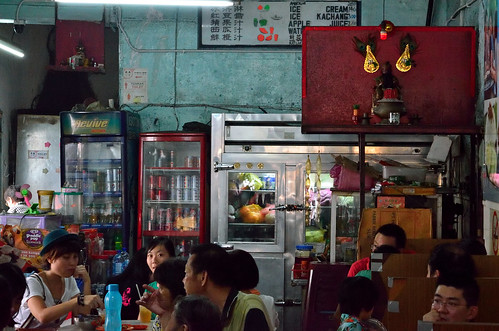
Image by pmorgan
We lined up for longer than I felt was going to be worthwhile at the Joo Hooi Lane Cafe on Jalan Penang in the UNESCO World Heritage area of Georgetown, Penang, Malaysia. I have to admit the old woman made a fine Penang Char Kway Teow (although I am too innocent and mild in this area of food appreciation). And the crowded grimly surrounding changes after a few minutes into something more comfortable and lively. The chendol – the right brown sugar substrate – was great.
Bruce Davidson interviewed by The Guardian:
"What, I ask, has a lifetime of taking photographs taught him? "That often what makes a good picture is almost subliminal. It could be a look on a face or a detail on a piece of clothing. You just have to go with the flow sometimes. When I was a kid, I played baseball and you heard the sound the bat made when it really connected with the ball; you knew you had a great hit. It’s the same with photography: sometimes you hear that click of the shutter and you know you’ve caught something really special."
www.theguardian.com/artanddesign/2011/apr/24/bruce-davids…
This photo slowly became one of ‘my darlings’ and is therefore at risk of undue personal beautification and I know it isn’t perfect; too grainy etc. But I like the colours and the light. I learned a lot about printing too trying to get this right.
Nice Recipes photos
A few nice recipes images I found:
Making Puerco Pibil
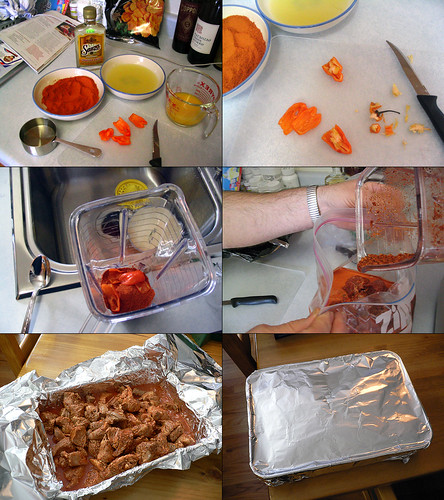
Image by ldandersen
Here’ s a cooking tutorial in the spirit of that lemon pie recipe that made the rounds awhile back.
A few other notes:
– The annato seeds are apparently very difficult to grind up (Robert Rodriguez recommends using a coffee grinder on the "Once Upon a Time in Mexico" DVD), but I was fortunately able to buy them in pre-ground form. Since they were already ground, I adjusted the recipe to use 3 tbsp instead of 5.
– I bought a bottle of pre-minced garlic, so I wasn’t sure how much to use. I ended up using about 2/3 of a 1 oz. bottle, and that seemed to work out fine.
– To devein the peppers, cut off the stem at the top, cut the peppers in half, and then clean the seeds and white stuff out of the inside. I mention this because I was unsure what that meant at first.
– Perhaps it’s just the high altitude here in Denver, but we ended up cooking the pork for a lot longer than 4 hours (we did something like 6) and probably could have done it longer to make it even more tender. I think this is one dish it would be difficult to cook for too long.
Apple Pudding Recipe
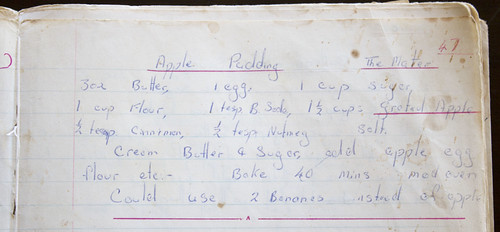
Image by Shadowfoot
Nice Recipes photos
A few nice recipes images I found:
Lemon Mascarpone Cheesecake

Image by Smaku
The other day my family had a potluck dinner. I made this cheesecake for dessert.
The best recipe

Image by Kai Strandskov
I wrote a recipe when I was 3. You may use this recipe if you pay me per serving.
Nice Healthy Food Choices photos
Some cool healthy food choices images:
Dance Your Health Out

Image by Christiana Care
Christiana Care hosted women from across New Castle County, Del., for an evening designed to inspire attendees to improve their health through exercise and smart nutrition choices.
Combining dance, fun and education, the first ever Dance Your Health Out event, held at Westminster Presbyterian Church in Wilmington, provided free Zumba instruction, healthy food preparation demonstrations and health screenings to more than 200 women.
Attendees took part in a 50-minute Zumba workout led by instructor Davi Mozie that had them dancing, clapping and moving to the music. Zumba combines Latin and international rhythms with a fun, aerobics-style workout. The group included women of all ages—from teenagers to a woman in her 90s—with varying movement abilities, including “newbies” and skilled dancers.
Christiana Care employee Cindy Noble was one of the more experienced dancers in attendance, having lost 47 pounds in the past year thanks to Zumba and an improved diet. She was impressed by the number of first-time dancers at Dance Your Health Out.
“Every time I would turn around just to see what was going on in the room, I was amazed at the volume of people who were there dancing and into it,” Noble said. “People kept coming onto the floor, and they weren’t intimidated.”
“I think the group was exceptionally energetic,” commented Mozie. “When we got started I really didn’t think they would be able to last. We ended up going 10 minutes longer than we had planned because the group just didn’t want to stop. It was great.”
Others took advantage of the free health screenings available throughout the evening. Staff from Christiana Care’s Imaging Services and Center for Heart & Vascular Health assessed attendees’ risk for bone and heart disease, while members of Christiana Care’s Department of Family & Community Medicine calculated body-mass index and provided body-fat analyses.
Following Zumba, Jenn Barr, with Christiana Care’s Center for Community Health, conducted a healthy-cooking demonstration. Attendees sampled low-calorie dinner options provided by caterer Food for Thought and learned about the importance of nutrition in maintaining a healthy lifestyle.
A post-event survey of attendees offered insight about the effectiveness of the inaugural event. More than 97 percent of respondents said they were motivated to eat healthier and increase their physical activity.
The event was a collaboration of several departments within Christiana Care, including: Women’s Health Services; the Center for Heart & Vascular Health; Family & Community Medicine, Center for Community Health; Food and Nutrition Services; Imaging Services; Preventive Medicine & Rehabilitation Institute’s Food & Nutrition Services; Employee Health; and Volunteer Services.
