
Nice Family Meals photos
Check out these family meals images:
Thanksgiving Meal at DFAC_50

Image by USAG Italy
The Vicenza Military Community celebrates Thanksgiving with a festive meal at the South of the Alps Dining Facility Nov. 27. Soldiers, Retirees, civilian employees, family members, and Italian employees enjoyed the traditional meal served in both the South of the Alps Dining Facility and the Del Din Dining Facility.
Photo by Laura Kreider, USAG Vicenza/PAO
Learn more on www.usag.vicenza.army.mil or www.facebook.com/USAGVicenza.
Beef And Barley Stew
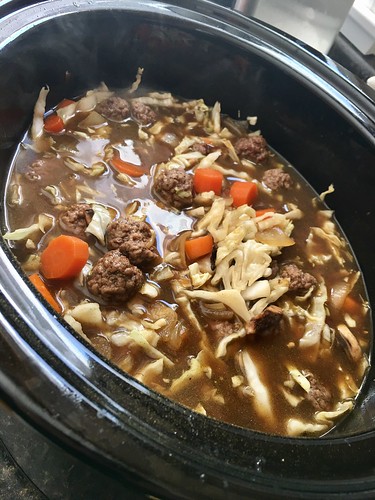
Image by Mark Bonica
Love my crock pot and love smelling my dinner cooking slowly all day.
2013 – 3rd Annual Flyfest
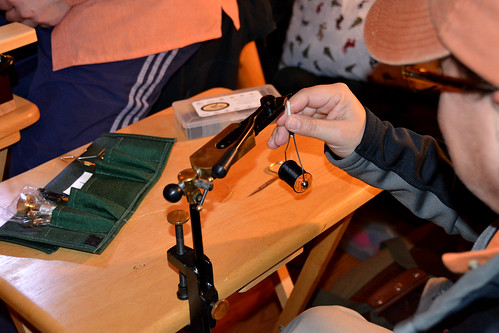
Image by Project Healing Waters Fly Fishing – Northern VA
More than 65 people attended the Third Annual PHWFF Flyfest held at Harman’s North Fork Cottages in Cabins, W.Va., Dec. 6-8. The event was hosted by the PHWFF Fort Belvoir and PHWFF Quantico Programs and more than 35 Warriors and several family members from seven different PHWFF programs fished 1 ¾ miles of the private access trophy trout stream during the three-day weekend trip.
In attendance during the weekend were Volunteer Guides and Warriors from the two local programs in addition to members from programs in Martinsburg, West Va.; Richmond, Va.; Atlanta, Ga.; Winchester, Va.; and Hunter Holmes McGuire VA Medical Center, Richmond, Va. For 14 Warriors, it was the first time they had traveled to Harman’s. Also, three professional fly fishing guides/instructors attended and donated their time to the event.
The air temperatures never rose above the upper 30s and often included wind chills in the teens with heavy rain and snow during the weekend’s festivities.
Bigg Riggs Farm, owned by Calvin Riggleman, an Iraq Marine combat Veteran and small farmer from Loom, W. Va., provided all meals for the three-day event.
Friday and Saturday evenings included Warrior raffles for prizes donated by supporters from around the country. Additionally, three small businesses donated products through the two PHWFF programs’ relationships on social media.
Evenings were filled with various fly tying instruction at different cabins to include wet flies, soft hackle flies, streamers and clouser minnows. Volunteers and professional guides provided the free instruction.
The stream had been recently stocked by Harman’s with rainbow and brown trout, ranging in size from 17 to 20 inches. However, due to extremely heavy rains on Friday, Saturday’s fishing schedule was pushed back and instruction on fly casting and fly tying were held during the morning and early afternoon. Fishing was limited to “shore only” during the afternoon. Even though fishing was limited, Warriors caught fish.
Sunday morning, attendees woke to a winter storm and many left early in the day. Those who were able to stay fished from shore. Five Warriors decided to extend their stay to wait for the storm to pass so they could safely travel home. (photo Lally Laksbergs)
DSC_0486
A few nice family meals images I found:
DSC_0486

Image by DanD301
Family Candids 2/14/2016
X-mas Dindin

Image by mrzeta
Cool Family Meals images
A few nice family meals images I found:
211205-Z-AS768-058
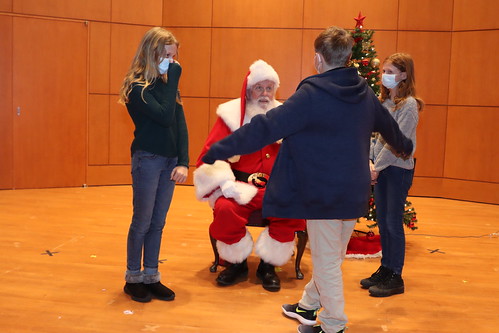
Image by North Carolina National Guard
North Carolina National Guard Families of JFHQ Headquarters and Headquarters Detachment celebrate the holidays in Raleigh, North Carolina, Dec. 5, 2021. Soldiers and their families spent the day visiting with Santa, making holiday crafts, watching holiday Movies and enjoying a holiday meal together. (North Carolina National Guard photo by Staff Sgt. Brendan Stephens)
Build Your Own Pizza, Christmas 2005
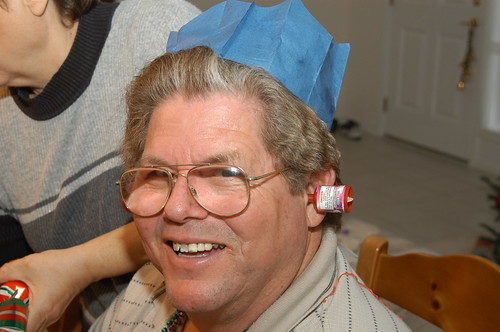
Image by Lee Bennett
Dad sticks it in his ear.
Fishing Cats Born at the National ZooFishing Cats Born at the Smithsonian’s National Zoo
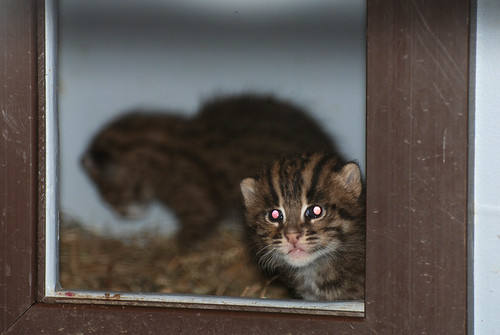
Image by Smithsonian’s National Zoo
Photo Credit: Courtney Janney, Smithsonian’s National Zoo
The Smithsonian’s National Zoo is closer to cracking the code for breeding one of Asia’s most elusive species with the birth of two fishing cats (Prionailurus viverrinus). Seven-year-old Electra delivered the kittens between 9 a.m. and 4 p.m. May 18 in an off-exhibit den. Their birth marks an important milestone: this is the first time fishing cats have successfully bred and produced young at the National Zoo.
Keepers are monitoring the mother and her offspring through a closed-circuit camera, allowing the family time to bond. Although the kittens will not make their public debut until later this summer, Zoo visitors can see their father, two-year-old Lek, on Asia Trail.
“Many months of behavior watch, introductions and research allowed us to get to this point,” said Zoo Director Dennis Kelly. “It’s very rewarding that our efforts have paid off. The future of their wild cousins hangs in the balance, so it’s imperative that we do all we can to ensure their survival.”
Before Lek arrived at the Zoo in January 2011, the Association of Zoos and Aquariums’ Species Survival Plan for fishing cats intended to pair Electra with another male. The SSP scientists determine which animals breed by considering their genetic makeup and social needs, temperament and overall health. Despite meeting these criteria, the other male and Electra never took an interest in one another. By contrast, when keepers introduced Lek and Electra, the cats soon began showing signs of affection, such as grooming and nuzzling.
The Zoo’s three adult fishing cats are taking part in a multi-institutional study that examines the many facets of introducing a potential breeding pair. Researcher Jilian Fazio is looking at stress and reproductive hormones to determine if different introduction techniques or individual personalities spell success or failure when it comes to fishing cat reproduction. The National Zoo’s recent success is particularly important for fishing cat populations in human care. Of the 32 fishing cats in the North America SSP, only 27 of them are considered reproductively viable. Lek and Electra’s kittens will become valuable breeders because their genes are not well represented in the captive population.
Only one other facility accredited by the AZA has successfully bred fishing cats since 2009. The Zoo hopes that by sharing its successful management strategies, other zoos across the country will have similar results.
National Zoo veterinarians will perform a complete physical exam on the fishing cat kittens and administer the first set of vaccines in the next few weeks. However, keepers have observed the kittens growing and becoming more independent every day.
“Electra will let the kittens explore only so far before she brings them back under her close watch,” said Animal Keeper Courtney Janney. “Her maternal instincts kicked in right away, and she’s proving to be a very adept and confident mother. We are very proud of the whole process and look forward to learning all we can about their development.”
Fishing cats are vanishing from riverbanks in their native India and Southeast Asia due to water pollution, poaching and increased shrimp farming throughout their habitat. Wild populations have decreased by 50 percent in the past 18 years, prompting the International Union for Conservation of Nature to change the species’ status from vulnerable to endangered.
Fishing cats are named after their hunting technique. The majority of their diet consists of prey such as fish, frogs and aquatic birds, and they have a unique way of capturing their meals. By tapping their paws on the surface of the water, they trick prey into thinking the water ripples are from an insect. When the prey is close enough, the cat will either dive into the water after it or scoop it out using its partially webbed paw.
Nice Family Meals photos
Some cool family meals images:
229th BEB celebrates 2018 efforts at annual holiday meal

Image by Virginia Guard Public Affairs
Virginia National Guard Soldiers assigned to the Fredericksburg-based 229th Brigade Engineer Battalion, 116th Infantry Brigade Combat Team celebrate their accomplishments at their annual holiday meal Dec. 1, 2018, in Fredericksburg, Virginia. Maj. Gen. Timothy P. Williams, the Adjutant General of Virginia, joined the unit for a turkey dinner with friends and family, and helped present awards to many of the battalion’s Soldiers, including those who deployed to help recovery efforts after Hurricane Florence. The Soldiers were greeted at the event by a large American flag hoisted by fire trucks from Fredericksburg Fire Department and Stafford County Fire and Rescue. (U.S. National Guard photo by Mike Vrabel)
2014 Thanksgiving Meal

Image by U.S. Army Garrison Casey
Army leaders express gratitude to Service members, civilian employees and families by serving a traditional Thanksgiving meal Nov. 27. Warrior Country dining facilities were decorated in seasonal colors, baked goods and a cornucopia of fruit and vegetables.
BrokenBow_CrosspinesCabin_13-15Nov2009 (29)

Image by brad_holt
Broken Bow – Nov 13-15, 2009: Steve, Sally, Mom and I made an impromptu trip to Broken Bow / Hochatown. We relaxed in a great cabin and visited Broken Bow Lake and the park and ate a couple of good meals at the local steakhouse.
Legoland Windsor 04-05-12
Some cool family meals images:
Legoland Windsor 04-05-12

Image by Dave Catchpole
LEGOLAND Windsor a theme park dedicated to children aged 3-12 years old and of course big kid adults.
An inspirational land where the kids are the hero and adults relive their childhood.
The fun never stops and imagination knows no bounds, a family attraction like no other.
Set in 150 acres of beautiful parkland, LEGOLAND Windsor is a unique family theme park with over 55 interactive rides, live shows, building workshops, driving schools and attractions.
It’s amazing what can be built with LEGO bricks – nearly 55 million of them!
From comical camels to fearsome fire-breathing dragons, world landmarks to musical pirates, young and old alike will be fascinated by the incredible LEGO models throughout the park.
Fun Facts about LEGOLAND Windsor
There are 34 LEGO pieces in an average Miniland figure.
The largest model in Miniland is the Canary Wharf Tower which is 5.2 metres tall and took 3 model makers 850 hours to complete using 200,000 LEGO Bricks!
The smallest models are the pigeons in Trafalgar Square which contain 5 LEGO bricks each
New in 2011 – Atlantis Submarine Voyage
Take a deep breath and submerge yourself in an underwater adventure.
Plunge into the depths with this world-first LEGO® submarine ride and immerse yourself in a magical underwater adventure.
So what’s New in 2012
STAR WARS MINILAND EXPERIENCE – The Force has arrived at LEGOLAND
Take a trip to a galaxy far, far away at the UK’s only indoor LEGO® Star Wars™ Miniland Experience at the LEGOLAND®Windsor Resort. Enjoy seven of the most famous scenes from the six live-action Star Wars movies, as well as a scene from the animated series Star Wars: The Clone Wars™ all made out of 1.5 million LEGO® bricks built in 1:20 scale. Follow the chronological path through the Star Wars timeline and retrace the major events of the beloved Saga featuring 2,000 LEGO® models, authentic sounds and lighting effects in the ultimate LEGO®Star Wars experience.
LEGOLAND WINDSOR RESORT HOTEL – Now open
An exciting LEGO adventure awaits you, as the amazing 150 room, fully themed LEGOLAND Hotel opens at LEGOLAND Windsor RESORT!
Staying overnight at the new LEGOLAND Windsor Resort Hotel is a must for all LEGO fans. From the spectacular dragon-guarded entrance and interactive LEGO features through to the brightly coloured pirate splash pool and fully themed bedrooms, the new hotel will inspire imaginations and create laugh-out loud memories. With dedicated indoor play areas, entertainment and a buffet-style restaurant serving child-friendly meals, it’s the perfect family treat.
3_Tom and Mary Rutherford thrive on political connections and railroad subsidies

Image by Jim Surkamp
FOLLOW SCRIPT WITH SEQUENCED IMAGES
The Most “Civil Warred” Home – Unburned – in Jefferson County (1) – J. Surkamp
civilwarscholars.com/?p=13553 5879 words
Made possible with the generous support of American Public University System, providing an affordable, quality, online education. The video and post do not reflect any modern-day policies or positions of American Public University System, and their content is intended to encourage discussion and better understanding of the past. More apus.edu
Visitors_Carriage_Inn_1861_1864_FINAL
But what Confederate Generals J.E.B. Stuart, Stonewall Jackson had in common with Federal commanding General Ulysses S. Grant; General Philip Sheridan, and General Nathaniel Banks – are the first floor rooms of Thomas and Mary Rutherford’s home on Washington Street in Charles Town, WV, today the Carriage Inn. They all spent time there, having fun or plotting.
This is the story of The Rutherford House/Carriage Inn during the Civil War seen through the eyes mainly of Richard Duffield Rutherford, a ten-year-old in 1860, who got around quite a bit, mirroring the rhythms and terrors of daily life in Charlestown during The Troubles.
Summary:
2_Thomas and Mary Rutherford and their eight children
Thomas and Mary Rutherford and their eight children – alongside the war’s flailing claws – had a flag made for Stonewall Jackson to take into battle in 1861 at First Manassas/Bull Run; entertained at dinner Federal General Nathaniel Banks with Stonewall’s returned flag precariously hidden away in an upstairs hearth; enjoyed Sam Sweeney’s banjo as he sat beside Gen J.E.B. Stuart who was visiting and sharing momentos with the family of his ride around Gen. McClellan’s army in October, 1862. They cared for wounded in late 1862, one who died and they buried. Daughter Mary dodged a bullet fired at her upstairs window, all while our callow narrator, Richard, nosed around town, saw things, and above all daily milked their two cows, that he often had to roam to find, bribing thankful Federal pickets with pie.
Then the most historic two hours at Rutherford House/Carriage Inn was the meeting of Federal Generals Grant and Sheridan (almost two years to the day after the terrible Antietam/Sharpsburg battle), having surrounded the Rutherford home with a huge security cordon, and used new information smuggled into them by an African-American named Thomas Laws – correctly convincing them the time was propitious to attack Confederate General Jubal Early on the Opequon Creek.
A lasting memory after the war was, for Richard, – one night sky’s hideous glow in all directions from the burning barns and, in some cases, homes torched as part of General Sheridan’s punitive campaign through the Valley, the one where his orders from Grant were curt and cruel – so that, to periphrase, a crow flying overhead would have to carry its own rations.
Meantime the Rutherfords ate, starved, baked, sheltered, hid, entertained and prayed for the end – the real and final end – to this war that left their town changed forever, with a past obliterated and eclipsed.
Chapterettes:
1. Tom and Mary Rutherford thrive on political connections and railroad subsidies.
2. The Fissure Opens – John Brown nails the issue and is hanged.
3. July, 1861: The flag from “The Ladies of Jefferson County” & first time, face-to-face with Federals
4. Future Federal General Francis Barlow bemoans Charlestown.
5. A Rutherford relative teases the Federal pickets.
6. Sister Virginia recounts how the gift flag comes back to the Rutherfords.
7. February 27-28, 1862 Federal General Nathaniel Banks crossed the Potomac with 30,000 men.
8. A misunderstanding about “church” music at the Charlestown Presbyterian church
9. Tempers flash over stolen pigs, poultry and cows.
10.Young Richard Rutherford had much better luck with the Rutherford’s cows thanks to food bribes.
11.Gen. Banks dines with the Rutherfords.
12.“We don’t want him!” said the Confederates.
1.Tom and Mary Rutherford thrive on political connections and railroad subsidies:
3_Tom and Mary Rutherford thrive on political connections and railroad subsidies
In 1860 Thomas Rutherford had ,000 in real estate and ,000 in personal property, largely from the estate left his wife, Mary, by her father, Richard Duffield, who first built and leased the train depot near his home in 1839 to the Baltimore & Ohio Railroad, that still stands in 2014. Their wealth was often in the form of United States dollars in the payments from the Baltimore and Ohio. Because their wealth was not in Virginia lands, enslaved persons or Confederate paper; the family still had about half their reported wealth ten years later in 1870. Their son-in-law, Cleon Moore, in fact, would build next door, becoming a lawyer for the Baltimore & Ohio Railroad after the war.
1859:
2. The Fissure Opens – John Brown nails the issue and is hanged.
4_I was sitting on a wall fence back of the Episcopal Church. The rope was arranged
Richard Rutherford wrote of that day:
John Brown was hanged on December 2, 1859 in the morning. I was sitting on a wall fence back of the Episcopal Church. The rope was arranged, the black cap adjusted. The sheriff came down the steps of the scaffold.
5_the body swung and in a few moments
The signal was given, the rope cut, the body swung and in a few moments, it was all over. Everything was done quietly. In a few minutes he was pronounced dead. – Rutherford, p. 21.
1861:
3. July, 1861: The flag from “The Ladies of Jefferson County” & first time, face-to-face with Federals
Rutherford recalled:
6_My sister presented a handsome Virginia State Flag
My sister (Virginia) had raised money and presented to the Second Virginia regiment of that Brigade a handsome Virginia State Flag. (On the back side there was a banner “from the Ladies of Jefferson County”). This was their Brigade flag in this battle. – Rutherford, p. 24.
In 1920 Mrs. Virginia Rutherford McMechem, Richard’s sister, wrote down the colorful history of the flag/banner:
The flag, which was ordered and made in Richmond for the 2nd Virginia Infantry of local enlistees, arrived in Winchester, Va. on the 17th July, just as the Brigade was about to leave for Manassas Junction on the 18th of July. The 1st (Stonewall) Brigade marched out of Winchester with the flag flying at the head of the Second Virginia Regiment. The purchase money was given me by Thomas Rutherford of Charles Town and several of his friends as a gift to the Regiment. Thomas Rutherford did not desire to appear so prominent in the matter, so it was allowed to go as from the Ladies of Jefferson County. On the 21st of July, date of 1st Manassas, this was the only flag carried into the battle by the First Brigade and the only Virginia flag in Jackson’s command, other troops being put under his command after he arrived on the field. – Virginia Rutherford McMecham, letter 1920.
Richard Rutherford’s first encounter with Federal soldiers:
7_I was frightened never having seen a Yankee soldier
On July 17, 1861 – I was frightened never having seen a Yankee soldier before and thinking of them as some sort of desperate creature who would kill us all. (But) The Yankees rode into town but did not seem to disturb anyone. . .My father said it was just a scouting party. Shortly after (Federal) General Robert Patterson did advance with his army and camped around the town. They stayed with us for some time. Many of them came to the house for water and often asked for something to eat, which we always gave if we had anything left! I got pretty well acquainted with many of them. . .(One of Patterson’s staff officers stayed with the Rutherfords-JS): a Captain Phillips asked if he could have a room at our house, so we gave him a room. The next day he brought a soldier with him and gave orders to allow no one to trespass or disturb the property. We fixed a bed for the guard in the wash house in the yard. – Rutherford, pp. 24-25.
David Hunter Strother wrote:
8_At the ruin of the old Episcopal Church – the first built in the valley – the main column halted
July 17 – Wednesday: west of Charles Town: At the ruin of the old Episcopal Church – the first built in the valley – the main column halted and detachments were sent forward to the right and left to inclose the town and capture the militia, which were reported to be assembled there. The army entered Charlestown with drums beating, colors flying, and all the pomp of a grand review. The streets were silent and deserted, the houses generally closed, and only a few negroes and children appeared to witness the “grand entree.” As the column passed, a Confederate flag was displayed from the upper window of a storehouse. The doors were instantly crushed in and the offensive emblem replaced by the Stars and Stripes. Otherwise everything was quiet. The sentiment of the army was conciliatory, while, from terror or sullen-ness, very few of the inhabitants showed themselves on the streets. – Strother, p. 156.
More . . .
4. Future Federal Major General Francis Barlow bemoans Charlestown:
9_Future Federal Major General Francis Barlow bemoans Charlestown
Federal officer Francis Channing Barlow of the 12th New York militia arrived and stayed in Charlestown in July, 1861 and did not fight at First Manassas/Bull Run:
We are encamped close to the field where they say John Brown was hung, they point out the spot where his gallows was erected. I went into the Court house where John Brown was tried this morning. This town is like all Virginia towns, . . . slovenly, with occasionally some large and pleasant looking places. Last night, we had no supper. . .(This morning) we foraged about to four or five houses for breakfast without success; they saying that they were eaten out, stolen out by those who preceeded us. They are openly Secessionists here almost entirely, the women talk openly, freely, but good humoredly. – Barlow, p. 14.
Barlow describes many men bathing in the Evetts Run near town:
10_Barlow describes many men bathing in the Evetts Run near town
(I) wiped my hands on my head, the brook which runs by our encampment being so dirtied, riled by the thousands quartered higher up that it dirties one more. . .Yet thousands of naked forms can be at this moment seen washing in it. Carlton Richards and I started for town. At the town pump in the most frequented part of town, close to the Courthouse, we took off our coats, shirts and stood entirely naked except trousers, stockings and shoes, washed and cleaned ourselves in the face of the multitude among soldiers of all climes. (Barlow to his brother Edward, from Charlestown, Va, July 18, 1861).- Barlow, p. 14.
5. A Rutherford relative teases the Federal pickets:
11_The Yankees had a patrol that marched up and down the streets every night
The Yankees had a patrol that marched up and down the streets every night. No lights were to be allowed after ten o’clock. My Aunt Nancy Douglass from St. Louis was staying with us at the time. One night the lamp was burning in her room when the patrol passed. They called. “Lights out!” So Aunt Nancy picked up the lamp and held it outside the window at them. They all laughed and told us to turn it out. “Well,” she said, “you told me: ’Lights out’ so I thought you wanted it outside.” . . . – Rutherford, p. 25.
The night of July 21st was rather exciting as the First Battle of Bull Run was fought that day. Captain Phillips told my father of their defeat at Bull Run and that the Rebs were moving on Washington. It was a desolate looking country that we looked over the next morning – the large army of troops leaving, it looked quite dilapidated. Fences were all burned and trash heaped everywhere. – Rutherford, p. 25.
Rutherford wrote that the town undertaker found the body of a local man killed at the battle, named Frank Butler, awaiting him at his business.
6. Sister Virginia recounts how the gift flag comes back to the Rutherfords:
12_Colonel Allen returned the 2nd Virginia’s Flag to Charles Town for safe keeping
October 30, 1861 – Due to confusion created by units carrying different flags after 1st Manassas the 30th October 1861 saw Governor Letcher present every Virginia regiment with a bunting flag. Colonel Allen returned the 2nd Virginia’s Flag to Charles Town for safe keeping.
13_Brigadier General Torbett of the U.S. Army was encamped
One afternoon in late 1861, Brigadier General Torbett of the U.S. Army was encamped around Charles Town with his Cavalry command. His Staff officers had pitched their tents in the beautiful grounds surrounding the Rutherford home and were lying all about on the grass. A little bare-footed colored girl came into the yard and wound her way among them, carrying a small package wrapped in a newspaper. Coming to a side door she handed the package to a member of the family saying, “Give this to Miss Ginny Rutherford”, and darted away. The Family never learned who the child was. Thomas Rutherford wrapped the flag carefully and put it under an iron hearth in the bed-room where it remained until after the close of the war. It would have been to them ample reason to the Federals for reducing the home to ashes. – Virginia Rutherford McMecham, letter 1920.
1862:
7. February 27-28, 1862 Federal General Nathaniel Banks crossed the Potomac with 30,000 men:
14_Federal General Nathaniel Banks crossed the Potomac
8. A misunderstanding about “church” music at the Charlestown Presbyterian church:
15_a hundred or more stout lungs vented the song, “John Brown’s body”
Wrote Edwin Bryant of the 3rd Wisconsin Infantry Regiment:
Our sojourn in Charlestown was exceedingly disagreeable to the inhabitants. It annoyed them to have their churches occupied by Yankee soldiers; and the little organ was kept in full blast in one of the churches occupied by a part of the Third, while a hundred or more stout lungs vented the song, then new and expressive of the northern feeling: “John Brown’s body lies a-mouldering in the grave, But his soul is marching on.’
The boys of the regiment determined to keep that song going constantly during our stay in Charlestown; and though we staid there several days they came near keeping good the resolve. The song and the throats of the singers were rather worn-out and ragged for sometime after. It is to be feared that the organ was a little wheezy, too. – Bryant, pp. 40-41.
Federal officer David Hunter Strother (who knew the locals well) describes the minister’s grief:
16_I saw Mr. Dutton flying along the street and hailed him
I saw Mr. Dutton flying along the street and hailed him. He greeted me and said he was going to see about the occupation of his church. I went with him and found Colonel [Thomas H.] Ruger’s Wisconsin men in occupation and taking up the carpets. The preacher was for getting out the pulpit furniture, Bibles, and candelabras. Presently looking toward the organ he saw a platoon of rugged-looking fellows around the organ and fumbling with the music books of the choir. He looked in agony at the prospective destruction and desecration. A moment after, the books were all open and fifty accordant voices rose in a thrilling anthem that filled the church with solemn music. The alarmed clergyman paused a moment. His face became calm and solemn. He turned to the officer in command: “You need not move the furniture from the pulpit, Sir. It will be safe, I feel assured. . . .” (The Reverend W. B. Dutton was the Presbyterian minister at Charles Town from 1849 to 1874).
Strother, p. 5.
9. Tempers flash over stolen pigs, poultry and cows:
17_Tempers flash over stolen pigs, poultry and cows
While here, the commanders were besieged with complaints from the citizens. Their geese, turkeys and chickens disappeared. They murmured that “private property was not respected.” The orders were strict enough; and officers did not countenance their violation. But so it was, everywhere that soldiers marched a great mortality prevailed among poultry, pigs and sheep. The women were most indignant and most outspoken. They took such revenge as bitter tongues and prayers that we might be exterminated could afford them. One well-to-do farmer protested against his corn and grain being taken as he had a large number of negroes dependent on him for support. In a week he was doing his own chores, milking with his own hands his last cow, and as woe-begone a secessionist as could be found anywhere. His slaves had left him; and his stock and poultry had joined the Union side, too. – Bryant, pp. 40-41 in Charlestown with Gen. Banks; spring, 1862.
The amount of pig and chicken stealing was very considerable and all the way from the Ferry I saw soldiers with slaughtered sheep and hogs, carrying their whole quarters upon their bayonets. There was a good deal of fence burning (but) there was no wanton acts of destruction. – Strother diaries, p. 6.
10. Young Richard Rutherford had much better luck with the Rutherford’s cows thanks to food bribes:
18_We kept two cows during the war and I did the milking
He wrote: We kept two cows during the war and I did the milking. I would turn them out every day and as there were no fences left, they would get pasture all round the town. It was my job to find them in the evening and bring them home. The pickets were on Hunter’s Hill and at first refused to let me go after them, but I soon found a way to bribe them. My mother would fix up a plate of cornbread or pie or almost anything in the eating line, and armed with food and a crock of clabber, I would march up to the pickets and while they were eating I would get the cows. One of them told me to bring them some more of that feed and I could go anywhere I wanted. – Rutherford, p. 32.
We could get nothing in the way of clothing except gray cloth made by the factories in the county, so everyone dressed in gray. No one who did not actually live in or around Charlestown can realize the trying times we suffered during the four years of war. – Rutherford, p. 33.
Federal General Nathaniel Banks with a large army, takes up residence nearby:
Gen. Banks made his headquarters also at Mr. Hunter’s house and one of his staff, Captain Shriver (Captain Robert C. Shriber of the 39th New York Infantry Regiment-JS), had a room at our house. He also sent a soldier, Jack White, to guard the property. A very nice and decent fellow, so he had his meals with the family and stayed with us even after the army advance to Winchester. – Rutherford, p. 27.
11. Gen. Banks dines with Rutherfords:
On March 10, 1862 (Monday)
Gen. Banks, the day he left, sent his headquarters wagons off early in the morning, expecting to leave soon himself, but being delayed until night, my father told Captain Shriver to invite the General and his staff over to supper with us. The invitation was accepted and very much appreciated by them if judged by the way they ate and their thanks afterward. They left about nine o’clock. – Rutherford, p. 27.
In late May, 1862, General Stonewall Jackson, hoping to culminate his victorious Valley Campaign against Gen. Banks by capturing Harper’s Ferry, failed to do so and retreated back through Charlestown, with a funny incident at the Rutherford house:
12. “We don’t want him!” said the Confederates:
In late May, 1862, Federal soldier Jack White (possibly “John White,” a private in the 39th New York Infantry Regiment under Captain Robert Shriber-JS) re-visited the Rutherfords as Confederate General Stonewall Jackson was driving White’s Federal army under Gen. Banks northward out of the Valley into Maryland. White got ensnared when arriving soldiers under Jackson happened to “look in on” the Rutherford household. Jackson’s men stayed in the area briefly, then leaving upon getting orders of Federal armies forming further south.
Richard Rutherford recalled:
One morning we were all sitting at the breakfast table and suddenly heard shooting on skirmish lines getting closer and closer. Poor Jack White was about through and got up and started to go – but my father told him to finish. In a few minutes men of Jackson’s line, came around the house. Some looked in the window and called out: “Hello there, Yank!” We went to the door and my father spoke to them, telling how White had taken care of the property for some months and could have easily gotten away, but that he (father Thomas Rutherford) had made him stay for breakfast. They said at once: “We don’t want him. . .” So White got on his horse and rode away unmolested. – Rutherford, pp. 27-28.
