
Nice Healthy Food Choices photos
Some cool healthy food choices images:
2012 Soil Health Information Day, Mitchell, SD
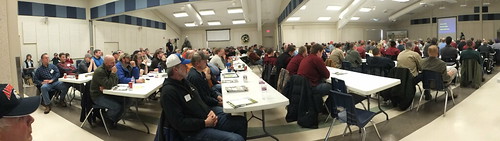
Image by NRCS SD
FOCUS FOR AG FUTURE: SOIL BIOLOGY AS “NEW FRONTIER”
NATURAL RESOURCES CONSERVATION SERVICE (NRCS), Pierre, SD, December 14, 2012—The inherent and dynamic qualities of soil were in the spotlight at the Soil Health Information Day held December 11, 2012 in Mitchell, SD. The event attracted over 230 people to hear regional and national agriculture and natural resources speakers.
Ruth Beck, SDSU Extension Agronomy Field Specialist, Pierre, says “One goal with the event was to help people learn ways to manage soil that improve the soil function. Although we can’t change the inherent qualities of the soil in our yards, fields and pastures, we can make management choices that affect the amount of organic matter, structure, depth, water and nutrient-holding capacity—the indicators of the health of a soil.”
“While the physical and chemical properties of soil have long been a main factor for land use planning, we are now getting an understanding of the biology happening beneath our feet,” says Colette Kessler, Public Affairs Specialist with the USDA Natural Resources Conservation Service (NRCS), Pierre. “Thanks to technology advances in microscopes and other equipment, our ‘understanding’ of the science of soil, biology in particular, has grown more in the last three years than the last 30,” she explains.
Two Alpena area farmers were enlisted to kick off the day demonstrating water infiltration with Ray Archuleta, Conservation Agronomist, from the NRCS East National Technical Center, Greensboro, NC. “Look at this…it isn’t a problem of run-off; we have an infiltration problem,” said Archuleta as the audience watched him work through the soil experiment. “Ray the Soil Guy” got to the ‘root’ of everyone’s questions with his presentation “Healthy Soils Make Healthy Profits.” Archuleta is passionate about soil health and his passion is infectious. He specializes in soil biology/ecology and diversity approaches for agro-ecosystem sustainability. “Understanding the biology—the microbes—in the soil is the ‘next step’ for farmers and ranchers,” says Archuleta. Every operation is unique. He outlined how to use above-ground management, such as crop rotations, cover crops, and reducing tillage as tools to manipulate the soil biology for a more sustainable system.
“A healthy soil is not compacted. It has structure with macro pores that allow water to infiltrate down into the profile,” Archuleta explained earlier. “When I pick up a shovelful of soil, it should look like cottage cheese.” Jim Hoorman, Ohio State University, via webinar, outlined their university research findings and the economics of using mixes of cover crops to improve the problem of compacted soils. Mixtures are better for addressing compaction than using a single cover crop species. Hoorman explained that disturbances, like tillage, can destroy pore structure in a soil. Good pore structure is very important, allowing the soil to breathe and move water.
“Healthy soil regulates water well,” explained Paul Jasa, Extension Engineer, University of Nebraska-Lincoln. Soil and residue management helps control where rain, snowmelt and irrigation water goes. “Field after field,” he says, “Residue drives the crop. Buffers are good, but a ‘band-aid;’ fix the soil in the field with residue and keep your water,” says Jasa. “Go out with a spade and see for yourself how your soil is handling water.”
Internationally known Dr. Dwayne Beck, Manager, SDSU Dakota Lakes Research Farm near Pierre, encourages producers to mimic nature, “I’ve learned more from observing nature than trying to change it.” Crop residue helps improve the soils balance of nutrients like nitrogen and phosphorus. Beck’s presentation outlined ‘Catch and Release Nutrients’ and working with natural cycles to maximize crop production. “Plant roots are ‘hot spots’ for biological activities like nutrient cycling and soil aggregate stability,” says Beck. Both living roots, and the dead or dying roots, improve water infiltration and break up compacted soils. An abundance of roots helps to stabilize biological activities below ground, making more nutrients and water available to plants.
A common theme recommended throughout the day was for people to get out in their yards, fields and pastures with a shovel. “If we dig a little, we can learn a lot,” says Kessler, “We can better understand how healthy soil should look and smell, and how healthy soil should feel in our hands.” By the year 2050, Earth’s population is expected to reach 9 billion. Keeping every inch of our soil healthy will be essential as farmers and ranchers work to produce as much food and fiber in the next 40 years as they have in the last 500.
Photos showing Soil health can also be found at: www.flickr.com/photos/87743206@N04/
2012 Soil Health Information Day, Mitchell, SD

Image by NRCS SD
FOCUS FOR AG FUTURE: SOIL BIOLOGY AS “NEW FRONTIER”
NATURAL RESOURCES CONSERVATION SERVICE (NRCS), Pierre, SD, December 14, 2012—The inherent and dynamic qualities of soil were in the spotlight at the Soil Health Information Day held December 11, 2012 in Mitchell, SD. The event attracted over 230 people to hear regional and national agriculture and natural resources speakers.
Ruth Beck, SDSU Extension Agronomy Field Specialist, Pierre, says “One goal with the event was to help people learn ways to manage soil that improve the soil function. Although we can’t change the inherent qualities of the soil in our yards, fields and pastures, we can make management choices that affect the amount of organic matter, structure, depth, water and nutrient-holding capacity—the indicators of the health of a soil.”
“While the physical and chemical properties of soil have long been a main factor for land use planning, we are now getting an understanding of the biology happening beneath our feet,” says Colette Kessler, Public Affairs Specialist with the USDA Natural Resources Conservation Service (NRCS), Pierre. “Thanks to technology advances in microscopes and other equipment, our ‘understanding’ of the science of soil, biology in particular, has grown more in the last three years than the last 30,” she explains.
Two Alpena area farmers were enlisted to kick off the day demonstrating water infiltration with Ray Archuleta, Conservation Agronomist, from the NRCS East National Technical Center, Greensboro, NC. “Look at this…it isn’t a problem of run-off; we have an infiltration problem,” said Archuleta as the audience watched him work through the soil experiment. “Ray the Soil Guy” got to the ‘root’ of everyone’s questions with his presentation “Healthy Soils Make Healthy Profits.” Archuleta is passionate about soil health and his passion is infectious. He specializes in soil biology/ecology and diversity approaches for agro-ecosystem sustainability. “Understanding the biology—the microbes—in the soil is the ‘next step’ for farmers and ranchers,” says Archuleta. Every operation is unique. He outlined how to use above-ground management, such as crop rotations, cover crops, and reducing tillage as tools to manipulate the soil biology for a more sustainable system.
“A healthy soil is not compacted. It has structure with macro pores that allow water to infiltrate down into the profile,” Archuleta explained earlier. “When I pick up a shovelful of soil, it should look like cottage cheese.” Jim Hoorman, Ohio State University, via webinar, outlined their university research findings and the economics of using mixes of cover crops to improve the problem of compacted soils. Mixtures are better for addressing compaction than using a single cover crop species. Hoorman explained that disturbances, like tillage, can destroy pore structure in a soil. Good pore structure is very important, allowing the soil to breathe and move water.
“Healthy soil regulates water well,” explained Paul Jasa, Extension Engineer, University of Nebraska-Lincoln. Soil and residue management helps control where rain, snowmelt and irrigation water goes. “Field after field,” he says, “Residue drives the crop. Buffers are good, but a ‘band-aid;’ fix the soil in the field with residue and keep your water,” says Jasa. “Go out with a spade and see for yourself how your soil is handling water.”
Internationally known Dr. Dwayne Beck, Manager, SDSU Dakota Lakes Research Farm near Pierre, encourages producers to mimic nature, “I’ve learned more from observing nature than trying to change it.” Crop residue helps improve the soils balance of nutrients like nitrogen and phosphorus. Beck’s presentation outlined ‘Catch and Release Nutrients’ and working with natural cycles to maximize crop production. “Plant roots are ‘hot spots’ for biological activities like nutrient cycling and soil aggregate stability,” says Beck. Both living roots, and the dead or dying roots, improve water infiltration and break up compacted soils. An abundance of roots helps to stabilize biological activities below ground, making more nutrients and water available to plants.
A common theme recommended throughout the day was for people to get out in their yards, fields and pastures with a shovel. “If we dig a little, we can learn a lot,” says Kessler, “We can better understand how healthy soil should look and smell, and how healthy soil should feel in our hands.” By the year 2050, Earth’s population is expected to reach 9 billion. Keeping every inch of our soil healthy will be essential as farmers and ranchers work to produce as much food and fiber in the next 40 years as they have in the last 500.
Photos showing Soil health can also be found at: www.flickr.com/photos/87743206@N04/
2012 Soil Health Information Day, Mitchell, SD

Image by NRCS SD
Vender Area
FOCUS FOR AG FUTURE: SOIL BIOLOGY AS “NEW FRONTIER”
NATURAL RESOURCES CONSERVATION SERVICE (NRCS), Pierre, SD, December 14, 2012—The inherent and dynamic qualities of soil were in the spotlight at the Soil Health Information Day held December 11, 2012 in Mitchell, SD. The event attracted over 230 people to hear regional and national agriculture and natural resources speakers.
Ruth Beck, SDSU Extension Agronomy Field Specialist, Pierre, says “One goal with the event was to help people learn ways to manage soil that improve the soil function. Although we can’t change the inherent qualities of the soil in our yards, fields and pastures, we can make management choices that affect the amount of organic matter, structure, depth, water and nutrient-holding capacity—the indicators of the health of a soil.”
“While the physical and chemical properties of soil have long been a main factor for land use planning, we are now getting an understanding of the biology happening beneath our feet,” says Colette Kessler, Public Affairs Specialist with the USDA Natural Resources Conservation Service (NRCS), Pierre. “Thanks to technology advances in microscopes and other equipment, our ‘understanding’ of the science of soil, biology in particular, has grown more in the last three years than the last 30,” she explains.
Two Alpena area farmers were enlisted to kick off the day demonstrating water infiltration with Ray Archuleta, Conservation Agronomist, from the NRCS East National Technical Center, Greensboro, NC. “Look at this…it isn’t a problem of run-off; we have an infiltration problem,” said Archuleta as the audience watched him work through the soil experiment. “Ray the Soil Guy” got to the ‘root’ of everyone’s questions with his presentation “Healthy Soils Make Healthy Profits.” Archuleta is passionate about soil health and his passion is infectious. He specializes in soil biology/ecology and diversity approaches for agro-ecosystem sustainability. “Understanding the biology—the microbes—in the soil is the ‘next step’ for farmers and ranchers,” says Archuleta. Every operation is unique. He outlined how to use above-ground management, such as crop rotations, cover crops, and reducing tillage as tools to manipulate the soil biology for a more sustainable system.
“A healthy soil is not compacted. It has structure with macro pores that allow water to infiltrate down into the profile,” Archuleta explained earlier. “When I pick up a shovelful of soil, it should look like cottage cheese.” Jim Hoorman, Ohio State University, via webinar, outlined their university research findings and the economics of using mixes of cover crops to improve the problem of compacted soils. Mixtures are better for addressing compaction than using a single cover crop species. Hoorman explained that disturbances, like tillage, can destroy pore structure in a soil. Good pore structure is very important, allowing the soil to breathe and move water.
“Healthy soil regulates water well,” explained Paul Jasa, Extension Engineer, University of Nebraska-Lincoln. Soil and residue management helps control where rain, snowmelt and irrigation water goes. “Field after field,” he says, “Residue drives the crop. Buffers are good, but a ‘band-aid;’ fix the soil in the field with residue and keep your water,” says Jasa. “Go out with a spade and see for yourself how your soil is handling water.”
Internationally known Dr. Dwayne Beck, Manager, SDSU Dakota Lakes Research Farm near Pierre, encourages producers to mimic nature, “I’ve learned more from observing nature than trying to change it.” Crop residue helps improve the soils balance of nutrients like nitrogen and phosphorus. Beck’s presentation outlined ‘Catch and Release Nutrients’ and working with natural cycles to maximize crop production. “Plant roots are ‘hot spots’ for biological activities like nutrient cycling and soil aggregate stability,” says Beck. Both living roots, and the dead or dying roots, improve water infiltration and break up compacted soils. An abundance of roots helps to stabilize biological activities below ground, making more nutrients and water available to plants.
A common theme recommended throughout the day was for people to get out in their yards, fields and pastures with a shovel. “If we dig a little, we can learn a lot,” says Kessler, “We can better understand how healthy soil should look and smell, and how healthy soil should feel in our hands.” By the year 2050, Earth’s population is expected to reach 9 billion. Keeping every inch of our soil healthy will be essential as farmers and ranchers work to produce as much food and fiber in the next 40 years as they have in the last 500.
Photos showing Soil health can also be found at: www.flickr.com/photos/87743206@N04/
Nice Barbecue Foods photos
A few nice barbecue foods images I found:
Barbecue

Image by Ida Aalen
Barbecue

Image by Ida Aalen
Nice Recipes photos
A few nice recipes images I found:
Rocky Road Recipe

Image by Theen …
Yesterdays Macro Monday models got put back into the 250g dark and 250g milk chocolate, and after some melting, mixing and refrigeration, became 2 large slabs of Rocky Road.
The other ingredients mixed into the melted chocolate were:
– 120g marshmallows
– 90g toasted almonds
– 45g toasted pistachios
– 45g glace cherries
– 60g dried cranberries
– 50g candied coconut strips.
There was also supposed to be 100g turkish delight, but I’d run out. Although it does add something to the flavour, there are already so many smells and tastes that I don’t think there’ll be too many complaints.
Taken with iPhone 3GS.
Art Recipe – Bob4

Image by Yelnoc
Of course, now that I’m this far into it, I remember that I should have started drawing left to right.
Nice Recipes photos
Some cool recipes images:
Scharfes Rinderragout im Römertopf

Image by sgplewka
recipe in english on request
Lüneburger Buchweizentorte / Buckwheat cake

Image by sgplewka
recipe in english on demand
Wirsingkohleintopf

Image by sgplewka
recipe in english on demand
Nice Barbecue Foods photos
Check out these barbecue foods images:
2010 Big Apple Barbecue Block Party: Ed Mitchell’s The Pit
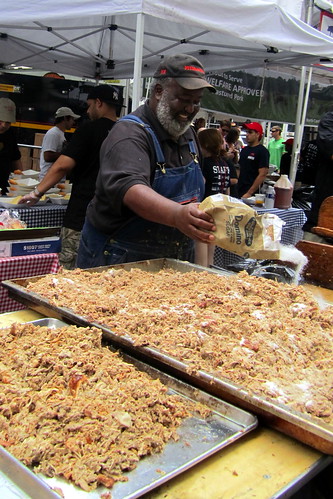
Image by wallyg
The 8th Annual Big Apple Barbecue Block Party took place in Madison Square Park on June 12 and 13, 2010. The Big Apple Barbecue Block Party brings together the country’s top pitmasters who cook up their award-winning food for over a hundred thousand barbecue enthusiasts.
Led by pitmaster Ed Mitchell, The Pit, from Raleigh, North Carolina, served up Whole Hog. Ed Mitchell, a Vietnam Veteran, began selling his parent’s 150-year old barbecue recipe at his mother’s grocery store in 1990. It proved so popular, that the family store transformed into a family restaurant and Ed’s reputation has grown ever since.
2010 Big Apple Barbecue Block Party: Ed Mitchell’s The Pit

Image by wallyg
The 8th Annual Big Apple Barbecue Block Party took place in Madison Square Park on June 12 and 13, 2010. The Big Apple Barbecue Block Party brings together the country’s top pitmasters who cook up their award-winning food for over a hundred thousand barbecue enthusiasts.
Led by pitmaster Ed Mitchell, The Pit, from Raleigh, North Carolina, served up Whole Hog. Ed Mitchell, a Vietnam Veteran, began selling his parent’s 150-year old barbecue recipe at his mother’s grocery store in 1990. It proved so popular, that the family store transformed into a family restaurant and Ed’s reputation has grown ever since.
2010 Big Apple Barbecue Block Party: Ed Mitchell’s The Pit
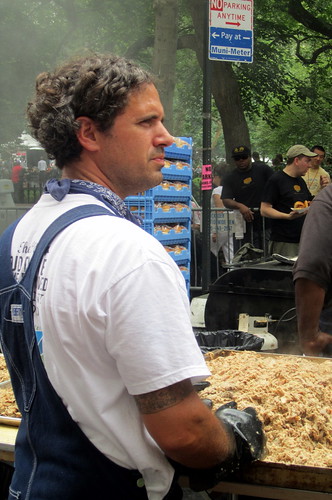
Image by wallyg
The 8th Annual Big Apple Barbecue Block Party took place in Madison Square Park on June 12 and 13, 2010. The Big Apple Barbecue Block Party brings together the country’s top pitmasters who cook up their award-winning food for over a hundred thousand barbecue enthusiasts.
Led by pitmaster Ed Mitchell, The Pit, from Raleigh, North Carolina, served up Whole Hog. Ed Mitchell, a Vietnam Veteran, began selling his parent’s 150-year old barbecue recipe at his mother’s grocery store in 1990. It proved so popular, that the family store transformed into a family restaurant and Ed’s reputation has grown ever since.
